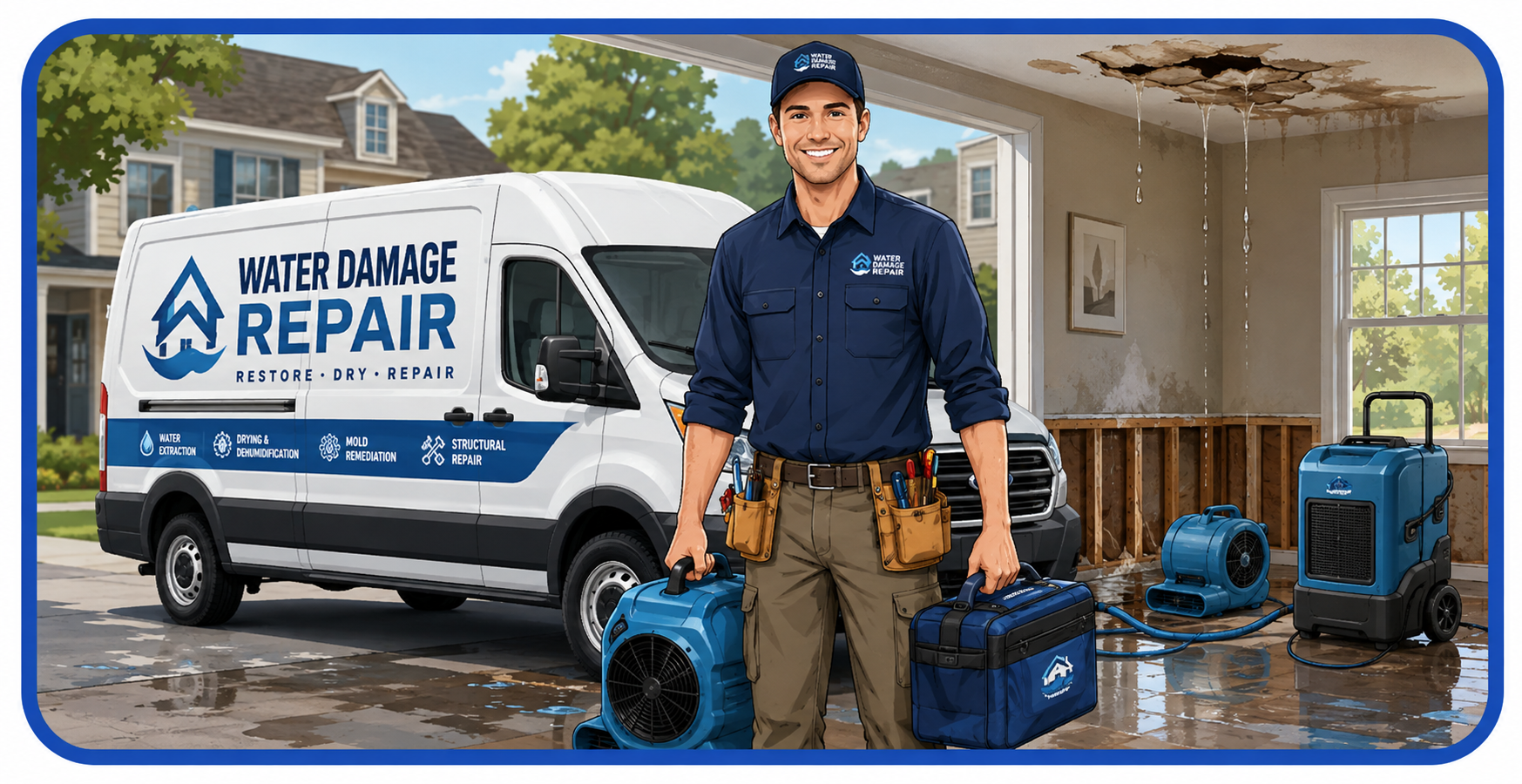
A flooded basement doesn't wait for business hours, and neither do we. Aqua Guard Water Damage keeps trucks staged around Georgetown so a licensed technician can be pulling standing water within the hour, not scheduling you for next Tuesday.
Call +1-844-578-1604 Now
Aqua Guard Water Damage built its Georgetown operation around one standard: arrive fast, document everything with moisture readings and thermal imaging, and communicate the drying plan in plain language before we touch a single wall.
We answer our own phones around the clock in Georgetown, which means the person who books your appointment already knows our schedule, our crew availability, and how fast we can realistically get a truck to your address.
We invest in ongoing training as drying standards and equipment evolve, rather than treating a technician's initial certification as the finish line.

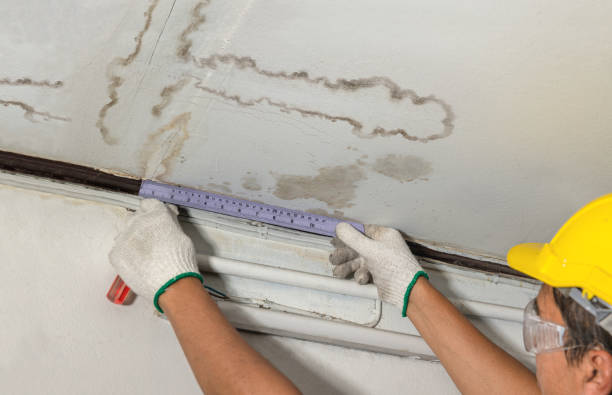
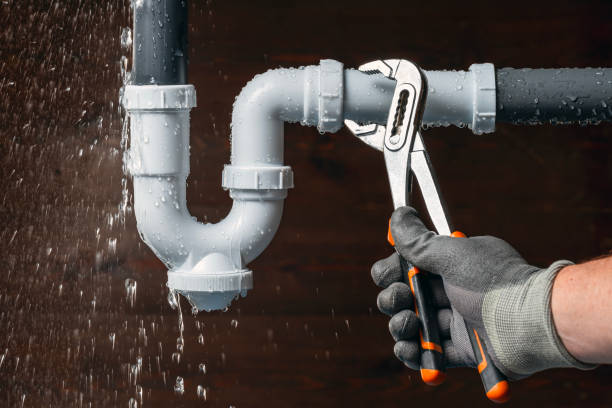
Ceiling stains near a bathroom or kitchen almost always trace back to a plumbing failure rather than a roof leak, which means the source is often closer and easier to fix than homeowners assume.
Musty odors that seem to follow you from room to room often mean the HVAC system is circulating spores from a hidden wet area, which spreads the problem rather than solving it.
Tile that suddenly sounds hollow when you tap it often means the mortar bed underneath has been sitting in moisture long enough to lose adhesion. That hollow sound rarely resolves on its own.
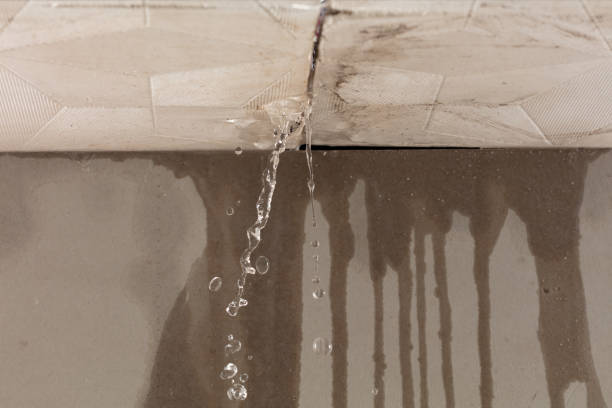
An unexplained jump in your water bill is frequently the first sign of a slab leak or a failing supply line long before any visible water appears. Catching it at this stage is far cheaper than waiting for a visible flood.
Paint that bubbles or peels away from a wall, especially near baseboards, usually means moisture is pushing through from behind rather than a simple application problem.
Mold that returns after cleaning with bleach is a sign the underlying moisture source was never addressed, since surface cleaning does nothing for saturated material behind the wall.
Our Flood Damage Cleanup process covers every stage of a water loss, from the first extraction pass to the final coat of paint, so you're never left coordinating separate contractors mid-project.
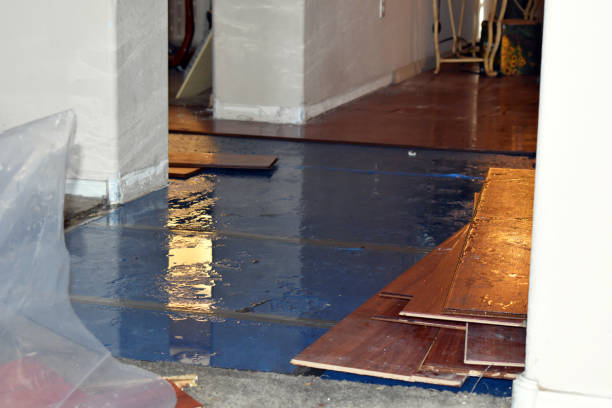
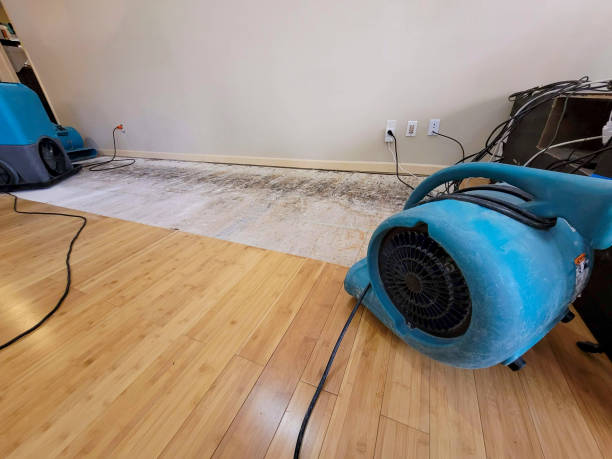
We prioritize extraction speed above everything else in the first hour, because every additional hour standing water sits raises the odds of secondary damage to subfloors and framing.
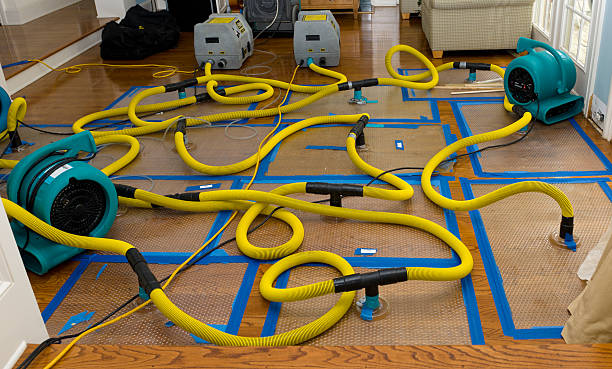
Drying logs track humidity, surface moisture, and airflow at every checkpoint, so you get documented proof the structure is dry before we close out the job — useful for your insurance claim too.
Blackwater jobs get treated with extra caution, since porous materials that touched contaminated water almost always need to be removed rather than dried in place.
Because mold can establish in as little as 48 hours, our drying timeline is built around beating that window rather than treating mold prevention as an afterthought.
We handle everything from replacing water-damaged drywall and insulation to refinishing floors, so the property is restored to pre-loss condition under one contract instead of three.
Specialized cleaning techniques can often save upholstery, electronics, and documents that look like a total loss at first glance, which keeps out-of-pocket replacement costs down.


A real person answers, gathers the details of your water loss, and routes the closest available crew immediately.
Technicians arrive with moisture meters and thermal cameras to map exactly how far the water has traveled, including inside walls and under flooring where you can't see it.
We set drying equipment based on the specific moisture readings taken during assessment, not a generic placement pattern.
Final verification is where a lot of shortcuts get taken industry-wide — we treat it as mandatory, not optional.
Insurance and licensing aren't just paperwork here — they're what let us stand behind the work if something doesn't go as planned.
A crew close by isn't a marketing line — it's the difference between drying equipment running in an hour versus waiting half a day.
We'd rather explain the cost clearly upfront than have that conversation after the job is already underway.
We stand behind every job with a documented re-inspection before we consider the work complete.
If our moisture readings don't hit a safe drying standard on schedule, we keep equipment on site at no additional cost until they do — that's the standard we hold ourselves to.
That same standard applies whether it's a single flooded bathroom or a full commercial loss — the sign-off criteria don't change based on job size.
Call +1-844-578-1604Aqua Guard Water Damage dispatches crews throughout Georgetown and the surrounding zip codes, including 31419, so response times stay fast no matter which side of town the call comes from.
Coverage isn't limited to the city center — our Georgetown routes extend out to the surrounding suburbs so outlying addresses aren't treated as an afterthought.

"A pipe burst behind our water heater and the crew here in Georgetown had extraction units running within 40 minutes of my call. They walked me through the moisture readings every day until it was fully dry."
James R., Georgetown"They caught mold starting behind our drywall before it spread and contained it properly instead of just painting over the problem like a previous contractor did."
Denise M., Georgetown"The sewage backup in our laundry room was handled with full PPE and proper disposal of the ruined flooring. I appreciated that they explained the Category 3 contamination process before starting."
Marcus T., Georgetown"Every question I asked got a straight answer, even the ones about cost, which is rare after dealing with two other contractors who kept dodging the pricing conversation."
Priya S., Georgetown"The thermal imaging inspection found damage behind a cabinet we never would have thought to check, which probably saved us from a much bigger mold problem down the road."
Carlos V., Georgetown"Coordinating a commercial job around our operating hours could have been a nightmare, but their crew worked around our schedule without us having to ask twice."
Angela F., Georgetown"The tech explained exactly which boards needed to come out and which ones tested dry enough to keep, so we didn't pay to replace more than necessary."
Tyrone B., Georgetown"Storm runoff got into our crawl space and the smell alone told us something was wrong. The crew found the vapor barrier had failed and fixed the actual cause, not just the symptom."
Wendy K., Georgetown